
Arapahoe County Federal Court Records
Arapahoe County is one of Colorado's most populous counties. It sits in the Denver metropolitan area. Many residents here file for bankruptcy each year. The county seat is Littleton. This city hosts the main Clerk and Recorder office. Bankruptcy cases, however, go to federal court in downtown Denver.
The U.S. Bankruptcy Court for the District of Colorado handles all filings. This court is at 721 19th Street. Arapahoe County residents can reach it easily. Many choose to drive to Denver for hearings. Others use remote options when available. This guide explains how to find records from both systems.
Arapahoe County Clerk Office Location
The Arapahoe County Clerk and Recorder has multiple locations. The main office is at 5334 S. Prince Street in Littleton. You can call them at (303) 795-4200. This office serves the largest county population in Colorado. They handle a high volume of records daily.
The office records many document types. These include property deeds, mortgages, and liens. Marriage licenses are issued here. Vehicle registration is also handled. For bankruptcy research, the property and lien records matter most. These documents often appear in bankruptcy schedules.
Hours vary by location. The Prince Street office typically opens at 7:00 AM. This early opening helps working residents. Evening hours are not available. Saturday service may be offered at some locations. Check their website for current hours. Calling ahead saves time.
The federal bankruptcy court website provides case information at https://www.cob.uscourts.gov/.
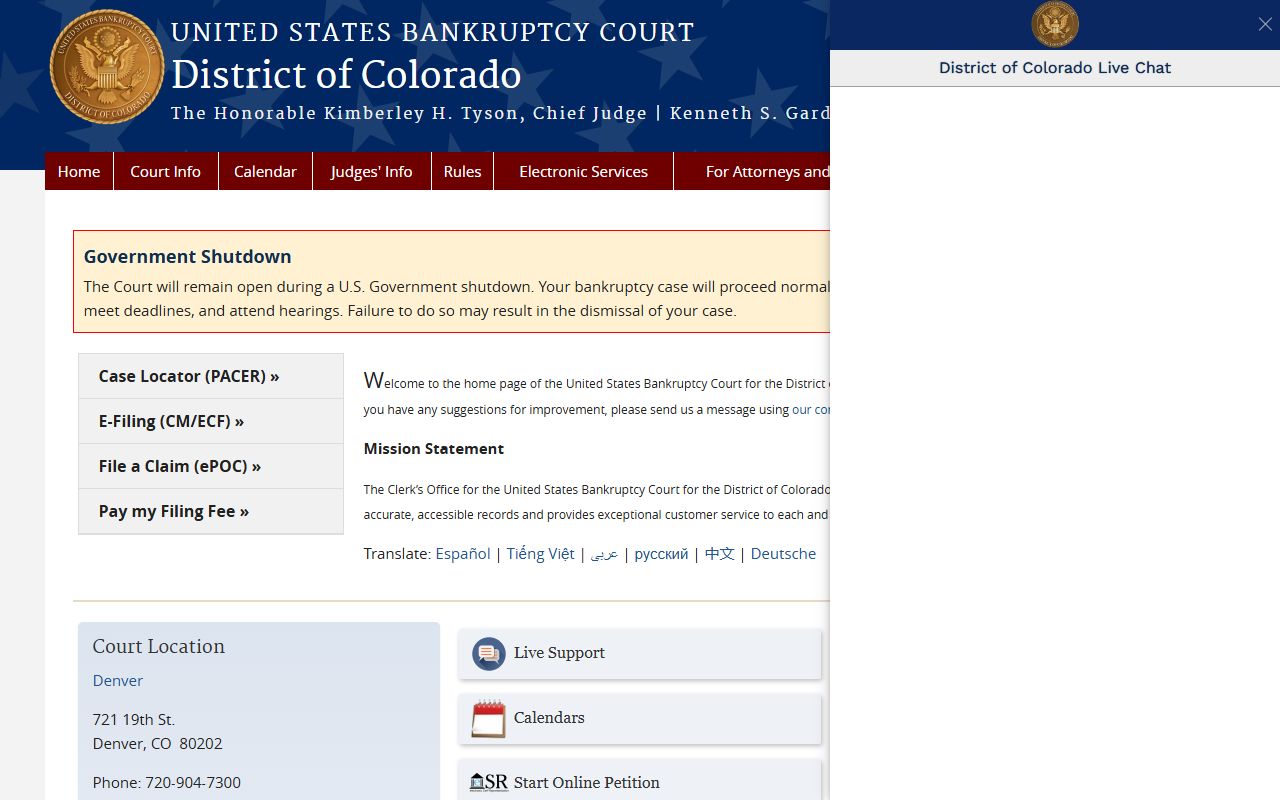
The Denver federal courthouse maintains all bankruptcy records for Arapahoe County residents.
Searching Bankruptcy Records Online
PACER is the key to online records. This system holds federal court documents. Visit https://pacer.uscourts.gov/ to start. The website works on computers and mobile devices. You can search from home or office.
Setting up an account takes minutes. Provide your name and contact info. Create login credentials. Verify your email address. Then you are ready to search. No credit card is needed to register. You add payment information later if needed.
Search for Arapahoe County cases by name. Enter the debtor's full name. The system searches Colorado federal court records. Results show all matching cases. Click any case to see details. The docket sheet lists all activity. Individual documents are viewable for a fee.
What Records Show
Bankruptcy files contain extensive information. The petition starts the case. It lists basic debtor information. Schedules follow. These detail all assets and debts. Income and expenses are reported. A statement of financial affairs is included.
The trustee reviews these documents. They look for assets to distribute. In Chapter 7, non-exempt assets are sold. In Chapter 13, payment plans are proposed. All this appears in the record. The discharge order ends most cases. This document is most commonly requested.
Means test calculations appear in Chapter 7. This determines eligibility. High-income filers may not qualify. They might need to file Chapter 13 instead. The means test form is public record. It shows detailed income history.
Arapahoe County Property Records Search
Property records connect to bankruptcy in important ways. Arapahoe County maintains these at the Clerk's office. You can search by address or owner name. Records go back many decades. Older records may be archived.
When someone files bankruptcy, property liens matter. Mortgage liens survive bankruptcy. Tax liens may also remain. The discharge removes personal liability. But the lien stays on the property. Title searches reveal these liens.
The County Clerk can provide certified copies. These cost a small fee per page. Certification proves the copy is accurate. This is useful for legal matters. Bankruptcy attorneys often need certified copies. They use them in adversary proceedings.
UCC and State-Level Records
UCC filings are at the state level. The Secretary of State maintains these. Search at https://www.sos.state.co.us/ucc/. This database is free to use. No account is required.
UCC records show security interests. These are debts secured by personal property. Cars, trucks, and business equipment appear here. Fixtures on real property may also be listed. Bankruptcy schedules must list all secured debts. UCC searches verify these listings.
Financing statements expire after five years. Creditors must file continuations. The UCC database shows current status. Active filings remain effective. Lapsed filings are ineffective. This matters in bankruptcy cases.
Note: Property records remain public even after bankruptcy discharge removes personal liability for debts.
Bankruptcy Filing Requirements
Filing bankruptcy requires preparation. Arapahoe County residents must complete credit counseling. This must happen before filing. Approved agencies provide certificates. The certificate is filed with the petition.
Means testing applies to Chapter 7. Your income is compared to state median. Colorado's median income varies by household size. Above-median filers face extra scrutiny. They may need to file Chapter 13. Below-median filers usually qualify for Chapter 7.
Documentation is extensive. You need tax returns. Pay stubs are required. Bank statements must be provided. Vehicle titles may be needed. A list of all creditors is essential. Missing documents delay the case.
Court Fees and Costs
Filing fees are set by federal law. Chapter 7 costs $338 as of 2024. Chapter 13 costs $313. These amounts change periodically. Check the court website for updates. Fee waivers may be available. Installment payments are an option.
Attorney fees are separate. Most filers hire lawyers. Chapter 7 attorney fees range from $1,000 to $2,500. Chapter 13 fees are higher. They often range from $3,000 to $5,000. The court reviews these for reasonableness.
PACER fees are minimal. Most users stay under the quarterly waiver. Even heavy users pay modest amounts. The convenience justifies the cost. You avoid travel to Denver. You get instant access to documents.
Getting Help in Arapahoe County
Legal help is available. Colorado Legal Services offers free aid. They serve low-income residents. Eligibility depends on income. Call them to apply. They may help with bankruptcy or refer you elsewhere.
The Arapahoe County Bar Association runs a lawyer referral service. They connect you with attorneys. Initial consultations are often discounted. Ask about bankruptcy experience. Not all lawyers handle these cases.
The federal court offers pro se assistance. This is for people without lawyers. They cannot give legal advice. But they can explain procedures. They provide form packets. These help with proper filing.
After Bankruptcy: Rebuilding Credit
Life continues after bankruptcy. Many Arapahoe County residents rebuild successfully. The discharge gives a fresh start. Some credit is available immediately. Secured credit cards help rebuild. Timely payments improve scores.
The bankruptcy stays on credit reports. Chapter 7 remains for ten years. Chapter 13 stays for seven years. Its impact lessens over time. Many people buy homes within a few years. Car loans are available sooner.
Keep all discharge documents. You may need to show creditors. Sometimes old debts resurface. The discharge order stops collection. Having your paperwork ready helps. Store it in a safe place.