
Find Colorado Bankruptcy Records
Bankruptcy records in Colorado are federal documents. They are kept by the U.S. Bankruptcy Court for the District of Colorado. This court serves all 64 counties in the state. You can search these records online through PACER. You can also visit the courthouse in Denver. The records show case filings, discharges, and all court actions. Anyone can search for these public records.
Colorado Bankruptcy Records Quick Facts
Where to Find Colorado Bankruptcy Records
The U.S. Bankruptcy Court for the District of Colorado keeps all bankruptcy records for the state. This federal court is located at 721 19th Street in Denver. The Clerk of Court maintains the records. You can access them in person or online. The court serves every county in Colorado.
You can view the main court website at www.cob.uscourts.gov. This site has forms, fee schedules, and contact details. The court is open Monday through Friday. Intake and records are available from 8:00 AM to 4:30 PM. Phone support runs until 5:00 PM.
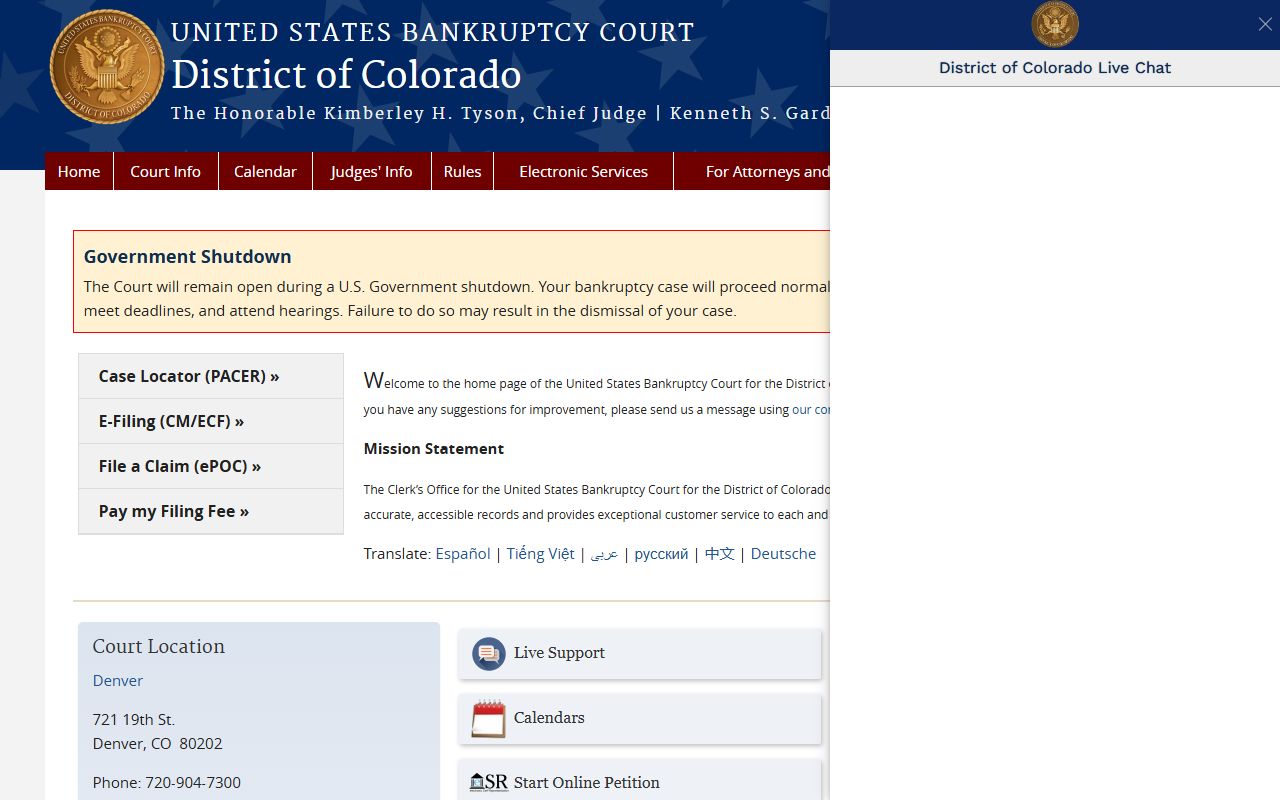
The court provides translation services. Languages include Spanish, Vietnamese, Arabic, Russian, Chinese, and German. This helps many Colorado residents access records. A valid ID is required to enter the building. Security screening is mandatory for all visitors to the Denver courthouse.
How to Search Colorado Bankruptcy Records Online
PACER is the main tool for searching bankruptcy records. PACER stands for Public Access to Court Electronic Records. It covers all federal courts. You can use it to find Colorado cases from your home. The system charges ten cents per page. The most you will pay is three dollars per document.
To use PACER, visit pacer.uscourts.gov. You need to create an account. You must provide a credit card. Fees under thirty dollars per quarter are waived. This means small users often pay nothing. You can search by name or case number.
The Colorado bankruptcy court has a voice system too. Call 866-222-8029 and enter extension 26. This is free. You can get basic case details by phone. The system works twenty-four hours a day. It covers all 64 Colorado counties.
You can also access records at the courthouse. Public terminals are available. Copies from these terminals cost ten cents per page. Staff copies cost fifty cents per page. You can pay with exact cash or credit card at the terminal. Cash payments must be exact change.
Types of Colorado Bankruptcy Records
Bankruptcy cases create many types of records. The petition starts the case. It lists all debts and assets. Schedules show detailed financial facts. The means test form shows if you qualify for Chapter 7. These forms are filed at the start of every case.
The 341 meeting is recorded. This is the meeting of creditors. The trustee asks questions under oath. A record of this meeting is kept. You can request a copy. The discharge order is the most sought record. It shows debts were wiped out. This comes at the end of a successful case.
Colorado bankruptcy records typically include these documents:
- Voluntary petition and signed forms
- Schedules of assets and liabilities
- Statement of financial affairs
- Creditor mailing matrix
- 341 meeting of creditors transcript
- Discharge order from the court
- Reaffirmation agreements
Adversary proceedings are lawsuits within a bankruptcy. These create separate records. Motions and court orders are filed throughout the case. All of these become part of the public record. You can access them through PACER or at the court clerk office.
Colorado Bankruptcy Court Fees
Filing fees vary by chapter type. Chapter 7 costs three hundred thirty-eight dollars. Chapter 13 costs three hundred thirteen dollars. Chapter 11 costs one thousand seven hundred thirty-eight dollars. These are set by federal law. They are the same in every state.
You can view the full fee schedule at www.cob.uscourts.gov/fees. This page lists every cost. It shows amendment fees and motion fees. Reopening a case costs more. The price depends on the chapter type.
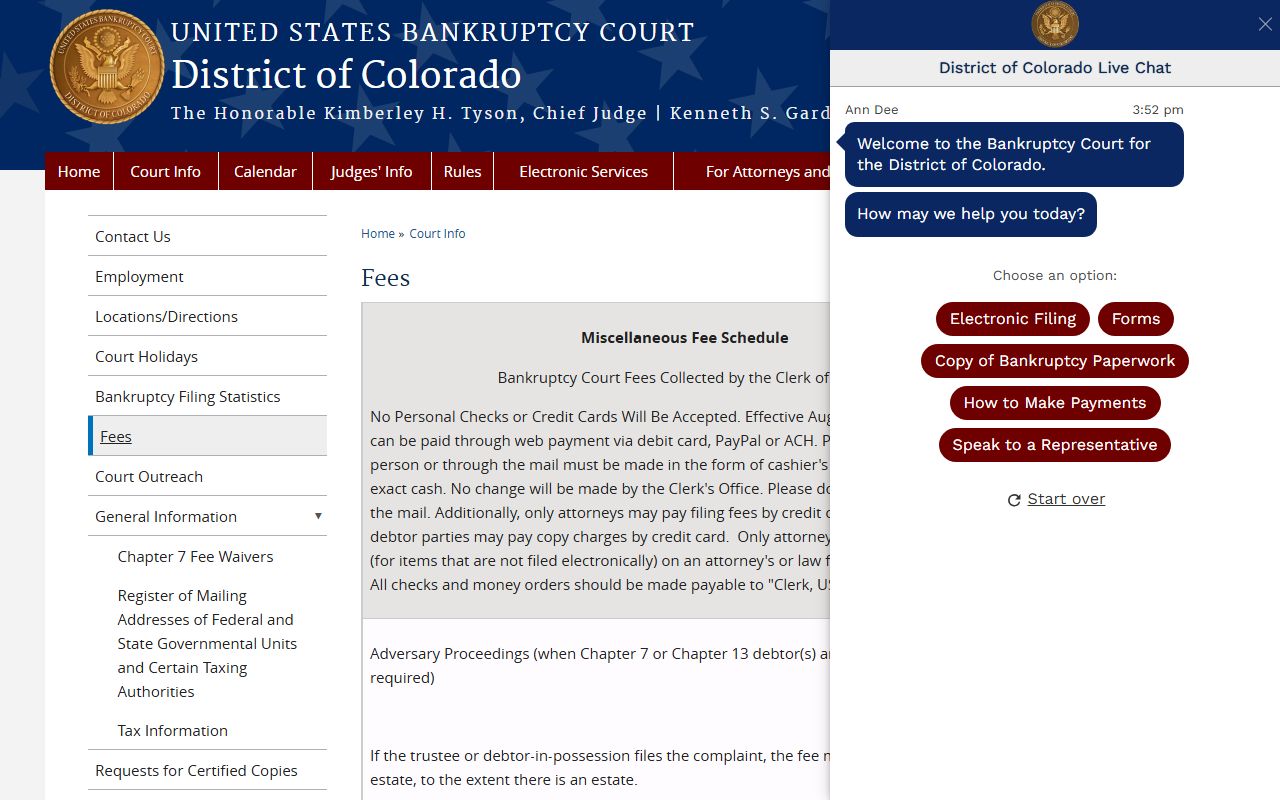
Payment options are flexible. You can pay online using debit, PayPal, or ACH. In person, you can use cashiers checks or money orders. Cash is accepted but must be exact. Personal checks are not accepted. Only attorneys may pay by credit card.
Fee waivers exist for those who qualify. You must file a form. You must prove low income. The court reviews your request. If approved, you can file without paying. This helps people who truly cannot afford the fees.
Colorado Bankruptcy Exemptions
Colorado has opted out of federal exemptions. This means you must use state exemptions. These laws protect certain property in bankruptcy. The homestead exemption is key. It protects two hundred fifty thousand dollars in home equity. Seniors and disabled persons get three hundred fifty thousand dollars.
Motor vehicles are protected too. You can keep up to fifteen thousand dollars in vehicle value. Seniors and disabled persons get twenty-five thousand. Personal property has many categories. Household goods are protected up to six thousand dollars. Jewelry is protected up to two thousand five hundred dollars.
Tools of trade get strong protection. Up to sixty thousand dollars is exempt for your primary occupation. Retirement accounts are fully protected. This includes 401k plans and IRAs. Public benefits are safe too. This covers unemployment, workers comp, and public aid.
Note: Exemption limits can change. Check current Colorado statutes for the latest figures.
Required Courses for Colorado Bankruptcy
Two courses are required for most filers. Credit counseling must be done before filing. You must complete it within one hundred eighty days. The course covers debt and budgeting. You get a certificate. You must file this with your petition.
The second course is debtor education. You take this after filing. It must be done before discharge. The course teaches money management. You learn how to budget after bankruptcy. A certificate is required to complete your case.
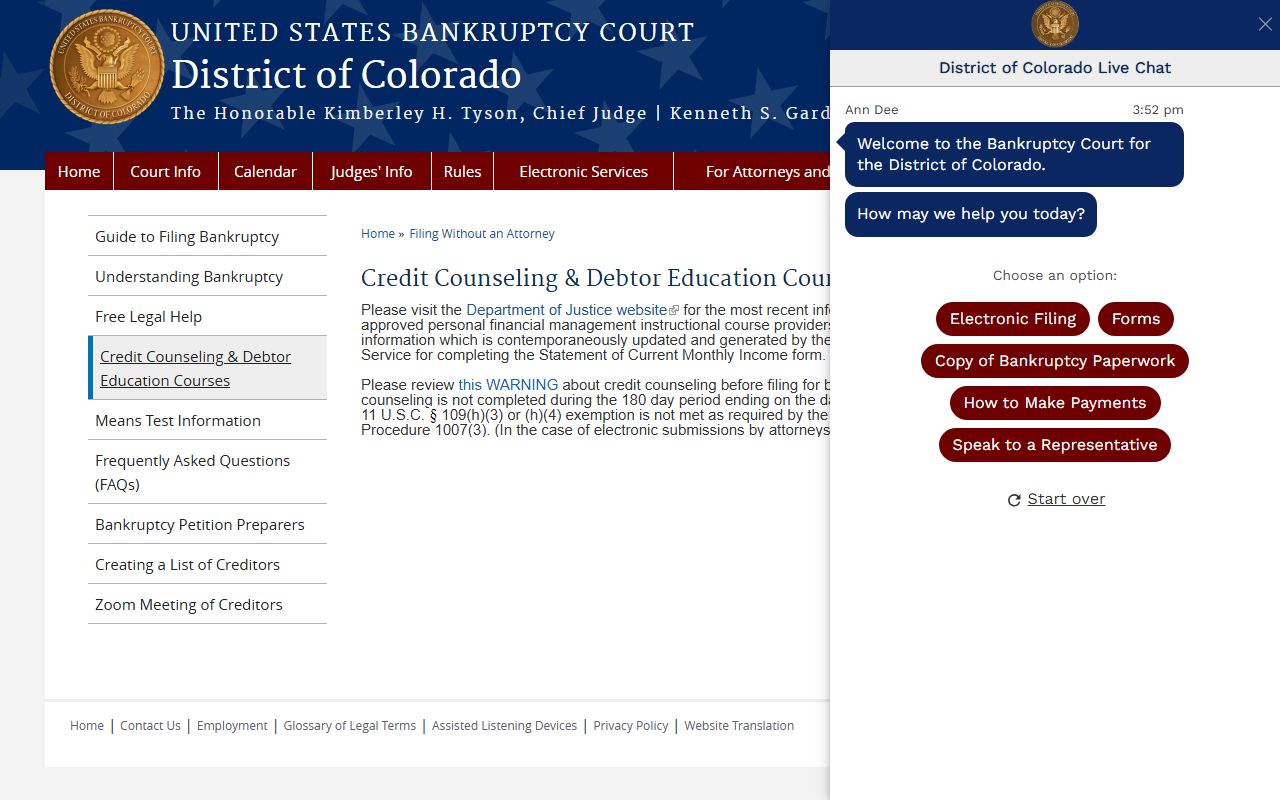
Approved providers are listed on the Department of Justice website. Colorado has many approved agencies. Some are local. ABC American Bankruptcy Counselors is in Bailey. Heritage Financial Education is in Aurora. Costs range from ten to fifty dollars. Fee waivers may be available.
Free Legal Help for Colorado Bankruptcy
Several groups offer free help. The Colorado Bar Association runs a Pro Se Bankruptcy Clinic. This clinic helps people file Chapter 7 cases. They give limited scope advice. You can meet by phone or video. Call 720-633-8866 to learn more. Visit www.cobar.org/bankruptcy for details.
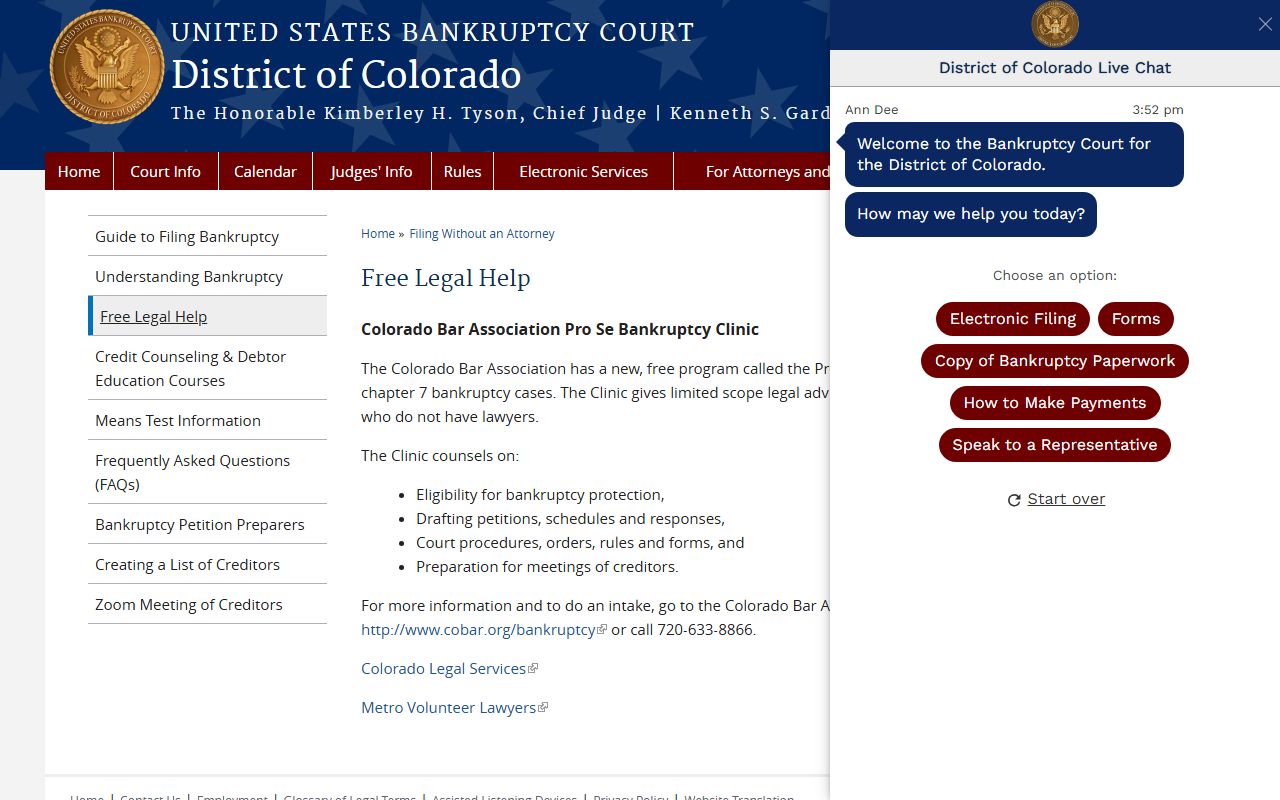
Colorado Legal Services helps low income residents. They offer free civil legal aid. Bankruptcy is one of their services. Call their statewide intake line. Metro Volunteer Lawyers is another option. They help with consumer issues. Visit www.coloradolegalservices.org for more info.
The Faculty of Federal Advocates offers pro bono help. They handle adversary proceedings. This is for people who qualify. An adversary proceeding is a lawsuit in bankruptcy. Free representation can make a big difference.
Colorado Bankruptcy Forms
All official forms are online. The court website has them. You can also get them from the clerk. Forms are free to download. You must use the most current versions. Old forms may be rejected. This delays your case.
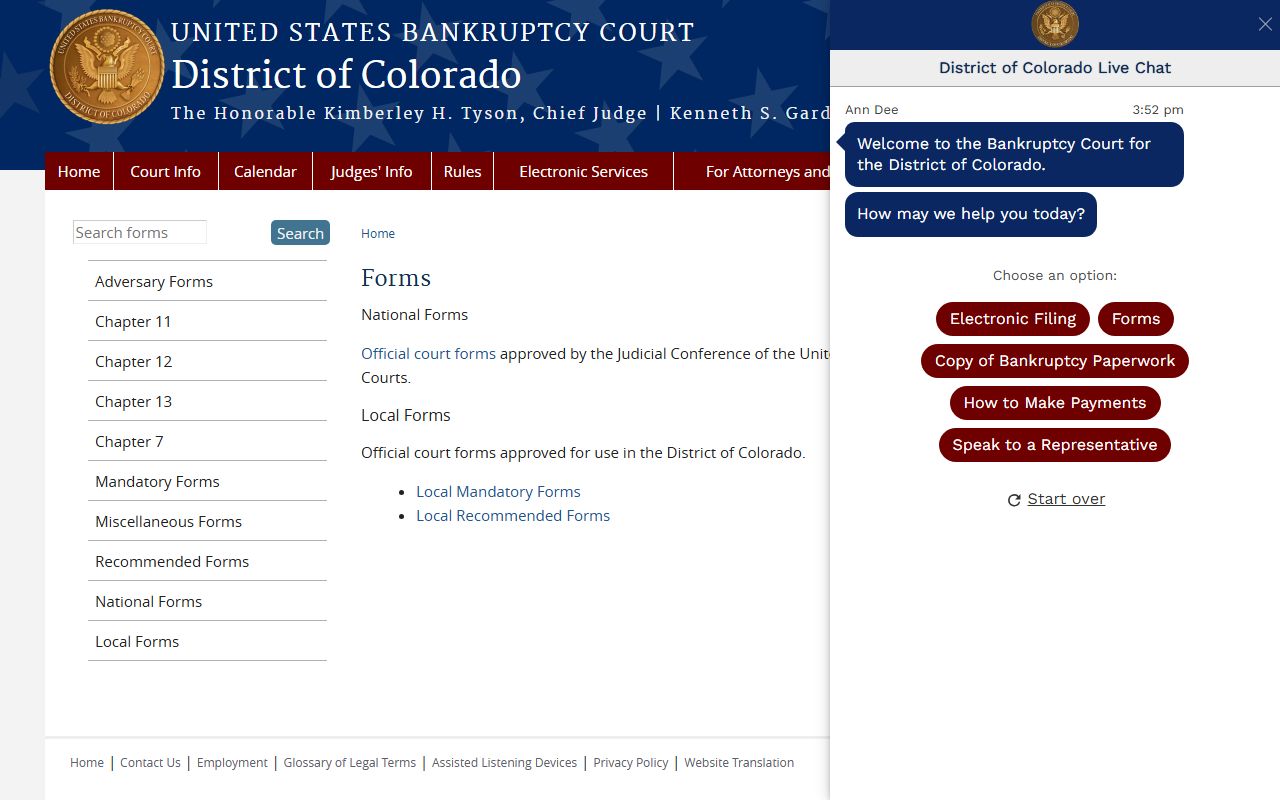
The main forms include the voluntary petition. You also need schedules A through J. The means test form is required for Chapter 7. Chapter 13 filers need a payment plan. All forms must be complete. Signatures are required on each one. You can find all forms at www.cob.uscourts.gov/forms.
Electronic filing is not open to everyone. Individual debtors cannot use CM/ECF. You must file in person or by mail. Attorneys can file online. Pro se filers must use paper. Documents are not filed until entered on the docket.
Archived Colorado Bankruptcy Records
Old cases are stored at the National Archives. Cases filed before January 1, 2000 are archived. The National Archives at Denver holds these records. They are located in Broomfield. You can request retrieval. The first box costs seventy dollars. Each extra box costs forty-three dollars.
You can also get SmartScan copies. These are electronic versions. They cost less than physical copies. Contact the archives at denver.archives@nara.gov. Or call 303-604-4740. Allow time for retrieval. These records are not instant.
Note: Archived records take longer to obtain than current case files in PACER.
Browse Colorado Bankruptcy Records by County
Colorado has 64 counties. All use the same federal bankruptcy court. Select a county below to find local resources. County clerks can help with related records. These include judgment liens and property records.
Colorado Bankruptcy Records in Major Cities
Major cities across Colorado fall under the federal bankruptcy court. Select a city to learn about local resources. City clerks may have additional information. Legal aid groups are often based in larger cities.