
Conejos County Colorado Bankruptcy Records Search
Conejos County is in southern Colorado. It is part of the San Luis Valley. The county seat is Conejos. This rural area has deep Hispanic roots. Agriculture dominates the local economy. Potatoes and alfalfa are major crops. The county is sparsely populated. When residents face financial difficulty, they file bankruptcy at the federal court in Denver. The distance is significant. Electronic access becomes essential.
Finding bankruptcy records for Conejos County requires federal resources. The County Clerk maintains local property records. Understanding both systems helps researchers. This guide explains how to access both types of records.
Conejos County Clerk and Recorder
The Conejos County Clerk and Recorder is in the town of Conejos. You can call them at (719) 376-5422. This office maintains the county's official records. Property documents are recorded here. The office also administers elections and issues marriage licenses.
For bankruptcy research, property records are relevant. Deeds show ownership. Mortgages indicate secured debts. Judgment liens are recorded. These documents help complete the financial picture. Trustees may search these during cases.
Office hours are typically limited. Small county offices in rural areas have constrained schedules. Calling ahead is essential. Staff can explain record availability. They can guide your search process.
The U.S. Bankruptcy Court for Colorado website is at https://www.cob.uscourts.gov/.
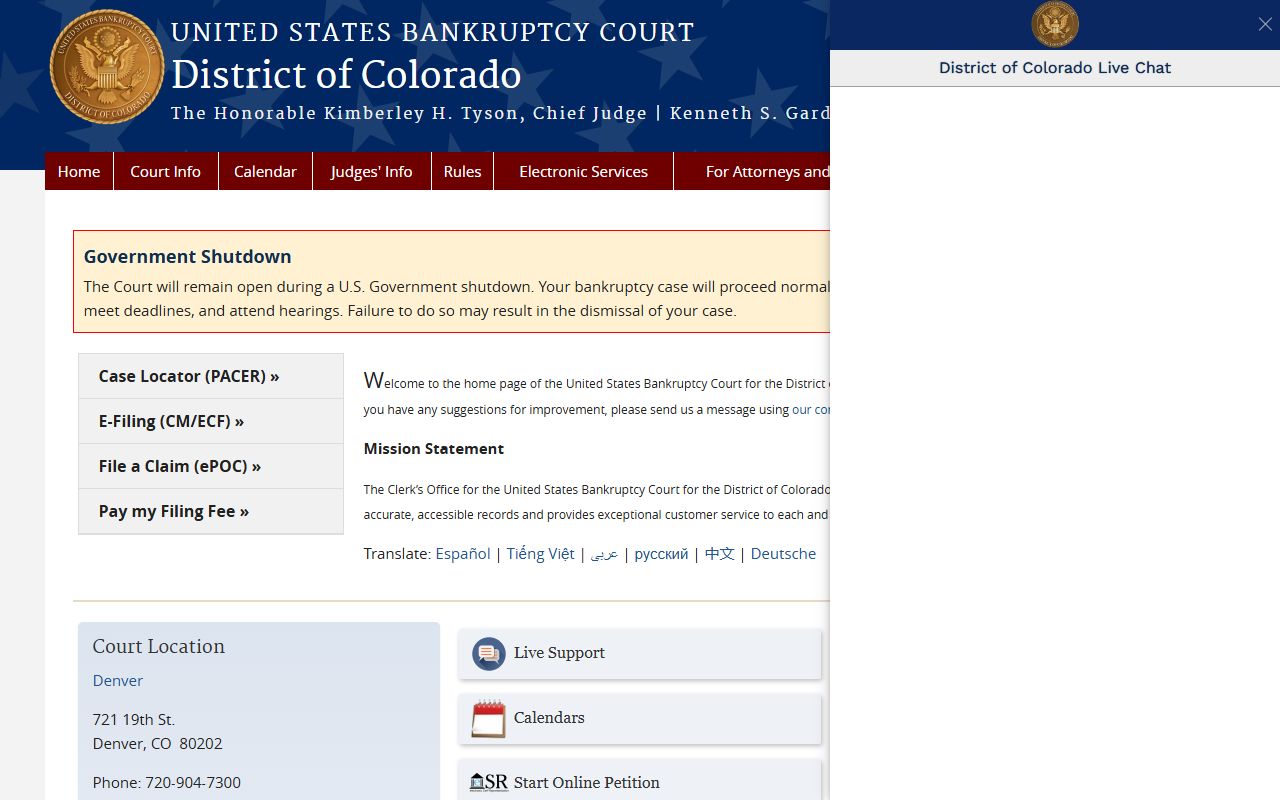
The Denver federal courthouse handles all bankruptcy filings from Conejos County.
Federal Bankruptcy Court Information
The U.S. Bankruptcy Court is at 721 19th Street, Denver, CO 80202. Phone contact is 720-904-7300. This court serves all Colorado counties. Conejos County is included. The distance makes online access crucial.
PACER provides remote access. Visit https://pacer.uscourts.gov/. This system holds records from 2001 forward. You can access it from Conejos or anywhere. Internet connection is all you need.
Registration is free and quick. Provide contact information. Create login credentials. Verification is usually fast. Once approved, search immediately. Fees apply only for document viewing. Waivers apply to most users.
How PACER Works
Name searches are most common. Enter the debtor's full name. The system searches Colorado records. Results show matching cases. You see case numbers and filing dates. Status information appears. Click for more details.
The docket sheet lists all documents. Every filing is recorded. You can view any document. Cost is $0.10 per page. Maximum is $3.00 per document. Downloads are permitted. This helps research.
Case number searches are direct. If you know the number, use it. This goes straight to the case. It saves time. Save numbers you look up often. This streamlines future research.
Note: PACER fees are waived for users with quarterly charges below $30.
Types of Bankruptcy
Most individuals file Chapter 7 or Chapter 13. Chapter 7 is liquidation. Non-exempt assets are sold. Unsecured debts are discharged. The process takes a few months. It provides a fresh start.
Chapter 13 is reorganization. Debtors keep their property. They pay over three to five years. A trustee receives payments. Creditors get distributions. Remaining debts discharge at the end.
Means testing applies to Chapter 7. Income is compared to state median. Colorado's median varies by household size. Those above median face extra scrutiny. They may need Chapter 13 instead.
Conejos County Property and Lien Records
The County Clerk maintains property records. You can search at the Conejos office. Records show ownership history. Mortgages and deeds are filed. These documents are public. They help verify bankruptcy schedules.
Judgment liens are recorded locally. These result from court cases. They attach to real property. Bankruptcy may affect these. Some can be removed. Others survive the discharge.
UCC records are at the state level. Search at https://www.sos.state.co.us/ucc/. This database is free. It shows security interests. Farm equipment may be listed. This affects bankruptcy treatment.
Filing Fees and Options
Bankruptcy has court costs. Chapter 7 filing fee is $338. Chapter 13 filing fee is $313. These rates apply as of 2024. Check the court website for current amounts. Fee relief may be available.
Chapter 7 allows fee waivers. You must prove financial hardship. The court reviews your situation. If approved, you pay nothing. Applications require supporting documents.
Chapter 13 offers payment plans. Pay part when filing. The rest over time. The court sets a schedule. This makes filing accessible. Full payment upfront is not required.
Getting Legal Help
Legal assistance is available. Colorado Legal Services serves southern Colorado. They help low-income residents. Call to check eligibility. Free help may be offered. Income guidelines apply.
Some attorneys consult remotely. Phone and video meetings work well. This overcomes distance. You can discuss your case. Learn about your options. Ask about fees.
Pro se filing is possible. The court provides forms. Instructions are included. This is challenging. Mistakes can be costly. Consider consulting an attorney first.
- Credit counseling is required before filing
- Debtor education is required before discharge
- All assets and debts must be listed
- The meeting of creditors is mandatory
- Chapter 13 plans last three to five years