
Teller County Debt Relief Records
Teller County residents seeking bankruptcy records access federal resources. The county seat is Cripple Creek. This historic mining town is famous for gold. Gambling now drives the economy. Casinos operate throughout the city. Tourism supports local businesses. Woodland Park is the largest community. It serves as a bedroom community. Residents commute to Colorado Springs. The mountains provide recreation. Financial challenges affect families. Job losses happen. Medical debt accumulates. Business ventures fail. Bankruptcy provides protection. It eliminates qualifying debt. It offers a fresh start. The U.S. Bankruptcy Court handles all filings. The Denver office serves Teller County. Records are public. Access is guaranteed. This guide explains the system.
United States Bankruptcy Court Access
The U.S. Bankruptcy Court for the District of Colorado is in Denver. The address is 721 19th Street. The phone is 720-904-7300. This court serves all Colorado counties. Teller County is included. Cripple Creek is west of Denver. U.S. Highway 24 provides access. The drive is manageable. Technology also helps. Online systems work well.
The court handles all bankruptcy chapters. Chapter 7 eliminates unsecured debt. It is the most common filing. Chapter 13 creates repayment plans. Wage earners use this option. Chapter 11 reorganizes business debts. Chapter 12 assists family farmers. Each serves specific needs. The process is standardized. Federal rules apply equally.
Filing creates comprehensive records. Petitions start cases. Schedules list assets. Statements detail finances. Income documentation is required. Tax returns verify earnings. Creditor lists ensure notice. Motions request action. Orders grant relief. All are preserved. The docket tracks activity. These records are public.
Cripple Creek County Clerk Office
The Teller County Clerk and Recorder is in Cripple Creek. The phone is (719) 689-2951. The office provides recording services. They do not keep bankruptcy files. Those are federal records. But they maintain related documents. Property deeds are recorded. Mortgages are filed. UCC financing statements are kept. Judgment liens appear.
Property records research helps. It shows ownership. It reveals liens. It identifies mortgages. This is useful information. The clerk provides access. Visit the office. Staff will assist. Records are organized. They date back many years. Research takes time. Plan your visit accordingly.
Recording documents requires fees. Rates are set by law. Payment methods vary. Call to confirm. Forms must be complete. Legal descriptions must be accurate. Incomplete filings are rejected. Delays result. Professional help is available. Title companies assist. Attorneys review documents.
PACER Electronic Records
The Public Access to Court Electronic Records system is online. Visit pacer.uscourts.gov to register. Accounts are free. Usage costs money. Each page is ten cents. Most cases are affordable. Quarterly waivers exist. Low usage is free. Under thirty dollars costs nothing.
Searching PACER is easy. Use party names. Try businesses. Case numbers work best. Results are comprehensive. Docket sheets show activity. Documents are PDFs. They are official. The system is reliable. It updates daily. Information is current. Research works well. Remote users benefit.
Colorado UCC Records
The Secretary of State maintains UCC records. Visit sos.state.co.us/ucc to search. This is free. No registration needed. UCC filings secure loans. Collateral is involved. Vehicles are common. Equipment works. Business assets apply.
Searching is simple. Enter debtor names. Use exact spellings. Try variations. Results show filings. Dates are clear. Secured parties are named. Collateral is described. View details online. Downloads work. Certified copies cost money. Regular access is free.
Note: The UCC database includes all financing statements filed in Colorado, including those from Teller County businesses and residents.
Gaming and Mountain Economy
Teller County has unique economic features. Cripple Creek is a gaming town. Casinos drive employment. Tourism supports the area. Woodland Park is different. It is a mountain community. Many residents commute. They work in Colorado Springs. The economy is mixed. Financial challenges vary.
Bankruptcy addresses these challenges. Chapter 7 helps those with limited income. It eliminates debt. The process is fast. Chapter 13 helps wage earners. It creates payment plans. Both offer the automatic stay. This stops collection. Creditors must cease. Lawsuits pause. Relief is immediate.
Property in Teller County varies. Values differ by location. Cripple Creek is different. Woodland Park has its market. Colorado exemptions apply. Homestead protection exists. Limits apply. Most homes are protected. Understanding helps. Consult an attorney. Plan before filing.
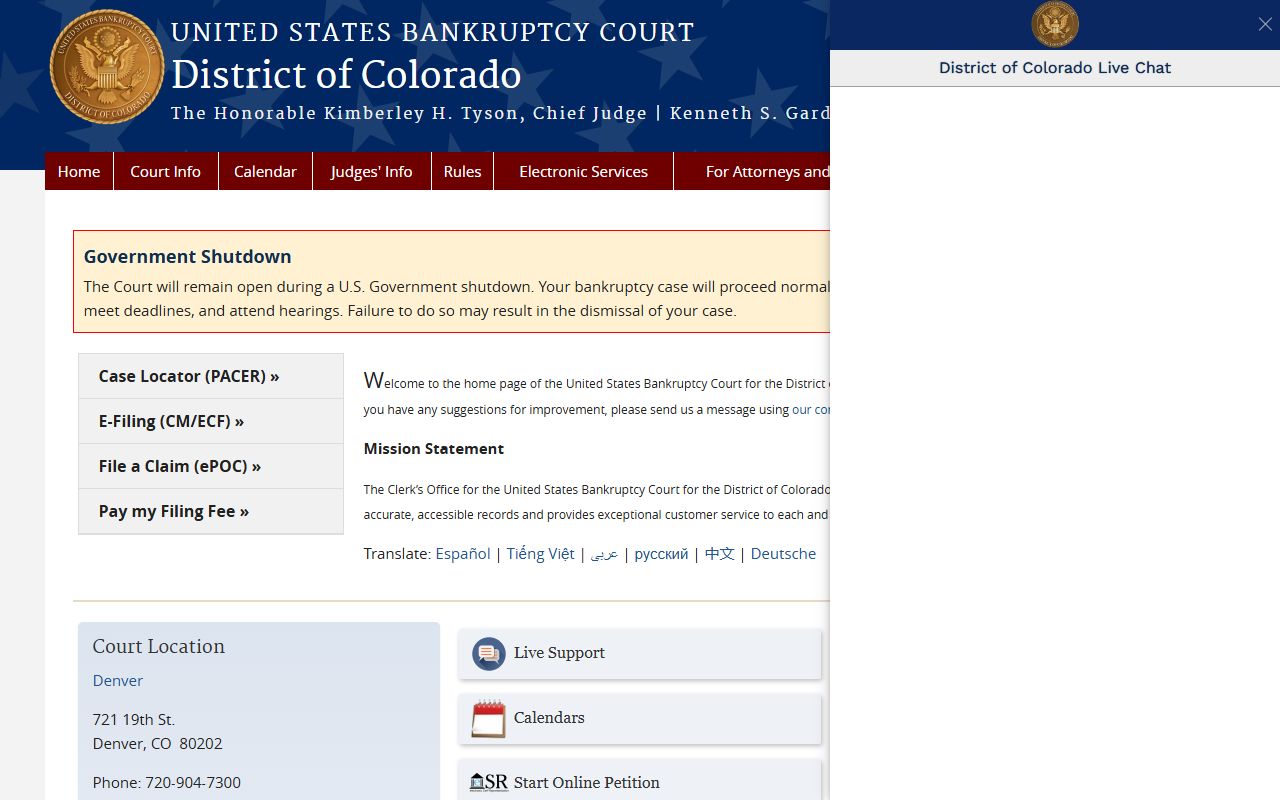
The U.S. Bankruptcy Court in Denver where Teller County residents file for bankruptcy protection.
Legal Help in the Region
Legal assistance exists for those who qualify. Colorado Legal Services helps. They serve the region. They advise on bankruptcy. They review documents. Services are free. Income limits apply. Asset tests exist. Priority goes to urgent cases. Apply promptly.
Private attorneys practice nearby. Woodland Park has lawyers. Colorado Springs has many. Phone consultations work. Video meetings help. Ask about experience. Inquire about fees. Flat rates are common. Payment plans help. Court fees are separate. Chapter 7 is $338. Chapter 13 is $313.
Rebuilding Credit
Discharge ends the case. Debt is eliminated. Fresh start begins. Credit rebuilding starts. Bankruptcy stays on reports. Chapter 7 is ten years. Chapter 13 is seven years. Impact lessens over time. Recovery is possible. Many rebuild within two years.
Secured cards help. They need deposits. Use them wisely. Pay in full. Credit unions assist. Local banks help. Ask about programs. Mortgages become possible. Wait two years. Keep payments current. Monitor reports. Check for errors. Keep discharge orders forever.
Quick Questions
Do I need to go to Denver? Much can be remote. Some meetings may be local. Ask your attorney. Plan accordingly.
Can I keep my home? Exemptions protect equity. Limits apply. Most keep their homes. Consult an attorney.
How do I find records? Use PACER online. Register an account. Search by name. Download documents.